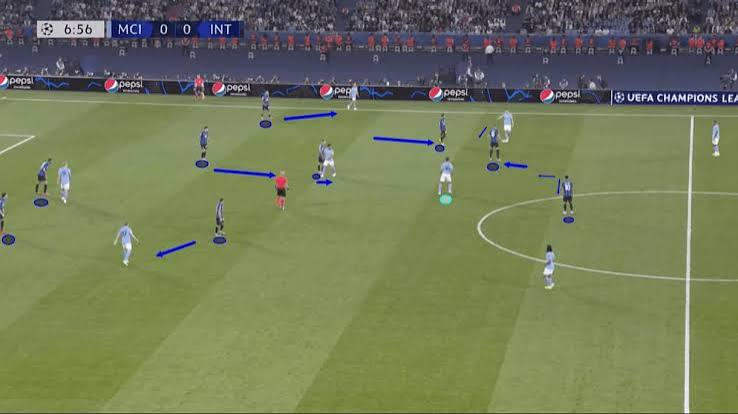

In La Liga 2017/2018, several teams relied on deep defensive blocks and fast counters to survive against technically stronger opponents, trading territory and possession for compactness and efficiency. For bettors, understanding how these deep‑block sides shaped match rhythm and risk helped identify when markets overstated favourites’ dominance and left room for value on handicaps, goal lines, or double‑chance outcomes.
Why Deep Blocks and Counter-Attacks Can Create Pricing Inefficiencies
Deep‑block teams deliberately give up possession and territory, focusing instead on compressing space near their own box and attacking quickly once they win the ball. The cause–effect sequence is straightforward: by refusing to engage high up the pitch, they reduce space in behind, lower the quality of chances conceded, and channel opponents into lower‑value shots from distance or crowded areas. When this works, the favourite’s apparent dominance in possession and shot counts does not translate into proportional scoreboard control, yet markets often continue to price heavy favourites based on perceived class gap and ball control rather than on how difficult it is to break down these compact structures.
Defining Deep-Block Counter Sides in 2017/2018 La Liga
While the 2017/2018 table is dominated by Barcelona, Atlético Madrid, Real Madrid and Valencia at the top, the lower and mid‑table is filled with clubs whose tactical identity leaned toward defence-first approaches. Contemporary and later analysis of La Liga defensive trends emphasises that many survival-oriented teams combined low blocks with patience and opportunistic counters as their primary strategy. Descriptions of low-block tactics in Spanish football highlight a hybrid style: sitting compact, conceding the ball, and focusing on not taking defensive risks over 90 minutes while waiting for mistakes and transitions.
In 2017/2018, this model most often appeared among relegation candidates and lower mid‑table teams who lacked the talent to press high or dominate possession but could maintain shape and punish overcommitted favourites when opportunities arose.
How Deep Blocks Change Match Dynamics Against Favourites
Matches involving a deep‑block underdog and a possession‑heavy favourite follow a recognisable pattern. The stronger team controls the ball in the final third, attempting to break lines and find shooting positions, while the underdog stays narrow and close to its own box, focusing on clearances, blocked shots and disciplined marking rather than on pressing. This changes the balance of chances: the favourite accumulates shots, many of them from outside or under pressure, while the underdog waits for turnovers and then transitions quickly into the space left by advanced full-backs and midfielders.
The impact is that statistical dominance in possession and attempts can coexist with finely balanced scorelines, especially if the deep‑block side has a competent goalkeeper and a few direct threats in attack. For odds that implicitly assume that territorial control leads to big-margin wins, this structural resistance is a source of potential mispricing.
Mechanism: Why Counter-Attacks from Deep Blocks Are Efficient
Research comparing offensive tactics across top leagues has shown that counterattacks and fast attacks are often more effective at generating goal-scoring opportunities than slower, combinative play. When possessions start from deeper zones and move vertically through reduced-width channels, they can penetrate more efficiently against an opponent whose defensive line is not in an advanced position. In La Liga contexts, this means that a deep‑block side which can quickly transition once it regains the ball might generate fewer overall attacks but a relatively high share of high‑value chances, especially against favourites whose rest‑defence is poorly organised.
Practical Indicators for Spotting Deep-Block Counter Teams
For pre‑match analysis, it helps to reduce the concept to observable indicators rather than subjective labels. A deep‑block counter side in La Liga 2017/2018 typically showed some mix of the following characteristics season‑long:
- Low average possession figures, especially against stronger teams, with many matches below 45%.
- Modest shot volume, but an above‑average share of shots from transition moments or from fewer passes, indicating reliance on quick attacks rather than sustained build‑up.
- Defensive records that were better than their possession statistics would suggest, reflecting compactness and a reluctance to overcommit.
Looking at the league’s performance stats for 2017/2018 reveals which teams combined limited attacking volume with respectable defensive resilience and occasional sharp bursts of scoring, a fingerprint consistent with deep‑block, counter‑first thinking.
Table: Stylised Deep-Block Archetypes and Pricing Implications
To make these profiles actionable, it is useful to summarise them in a simple archetype table anchored in the 2017/2018 context.
| Archetype (2017/18 La Liga) | Typical Traits | Pricing Implication |
| Low-block relegation battler | Very low possession, limited shots, decent defensive organisation | Often undervalued on +handicaps vs big favourites |
| Counter-focused lower mid‑table side | Deep shape, relies on transitions, a few key attackers | Dangerous at long odds; value in double chance or +1 AH |
| Conservative mid-table survivor | Narrow 4‑4‑2, risk-averse, content with draws | Tight matches, unders and small underdog handicaps live |
These archetypes do not map one-to-one onto specific clubs without detailed data, but they illustrate how deep-block strategies manifest in performance stats and how they influence which markets—handicaps, totals, double-chance—are most sensitive to mispricing.
How to “Play” Deep-Block Sides to Gain a Price Edge
The core idea is not to back every deep‑block team blindly, but to know when their style makes market expectations of dominance unrealistic. In practice, this translates into several recurring setups:
- Large Asian handicaps on the underdog when a deep‑block side visits a possession‑heavy favourite who struggles to break compact defences, because the match is structurally more likely to stay within one or two goals than odds imply.
- Double‑chance bets (underdog win or draw) in fixtures where the favourite has limited tools against low blocks and the underdog has proven counter threats, especially in late-season games where favourites can be tense and cautious.
- Unders or “fewer team goals for the favourite” when the deep‑block side’s record shows that they consistently reduce shot quality against stronger teams, even if they allow plenty of harmless possession.
The cause–effect logic is that structural resistance and counter threat pull outcomes away from blowouts and toward tighter scorelines, which can make standard big‑favourite pricing too optimistic if it does not fully respect the tactical match‑up.
Integrating casino online Markets into a Deep-Block Strategy
When this analysis is applied in remote betting environments, the order of operations should remain tactics first, prices second. After identifying that a match involves a deep‑block underdog facing a possession‑heavy side, and that performance stats suggest the underdog keeps games tighter than expected, you then examine available markets on a casino online website. Key questions include whether the favourite’s handicap is inflated relative to the underdog’s historical losing margins, and whether goal lines assume a level of domination inconsistent with how similar tactical matchups have played out.
If the lines on handicaps or totals price in a comfortable win and high scoring, while your model expects condensed space, low shot quality for the favourite, and occasional counter punches, the discrepancy becomes a potential source of value. In this sense, deep‑block analysis acts as a filter that tells you when the price is asking you to believe too much in the favourite’s ability to break compact defences.
Where UFABET Can Sit Inside a Deep-Block Workflow
Once tactical and statistical work points toward specific angles—large underdog handicaps, unders, or double‑chance positions—the remaining question is where to execute them. A structured approach involves comparing odds from several operators, looking for places where the market has been slower to adjust to how stubborn deep‑block La Liga sides can be against possession‑heavy opponents. In that wider comparison, a bettor might at times incorporate a web-based service like ufabet168 as one of the reference points, not to drive the analysis but to see whether its prices on underdog lines or goal totals sit higher or lower than the consensus for matches featuring clearly defensive sides. If its numbers remain more optimistic about big wins for favourites—despite your reading of 2017/2018 patterns that says low blocks tend to drag games toward narrower results—that difference can influence where you place stakes, while the core edge still comes from the tactical mismatch between deep‑block resilience and market assumptions about attacking dominance.
Summary
In La Liga 2017/2018, deep‑block counter teams used compact defensive shapes and fast transitions to neutralise technical superiority, often keeping matches closer than possession statistics suggested. Because many odds still leaned heavily on league position, ball control and goal tallies, that style occasionally left room for value on underdog handicaps, double‑chance bets and unders whenever favourites faced compact, risk‑averse opponents. Treating these defensive strategies as structural features rather than one‑off surprises, and then checking how different operators price those matchups, turns low blocks from “parking the bus” into a distinct tactical lens for finding prices that underestimate just how hard it is to break down a well-organised wall.